
 Save
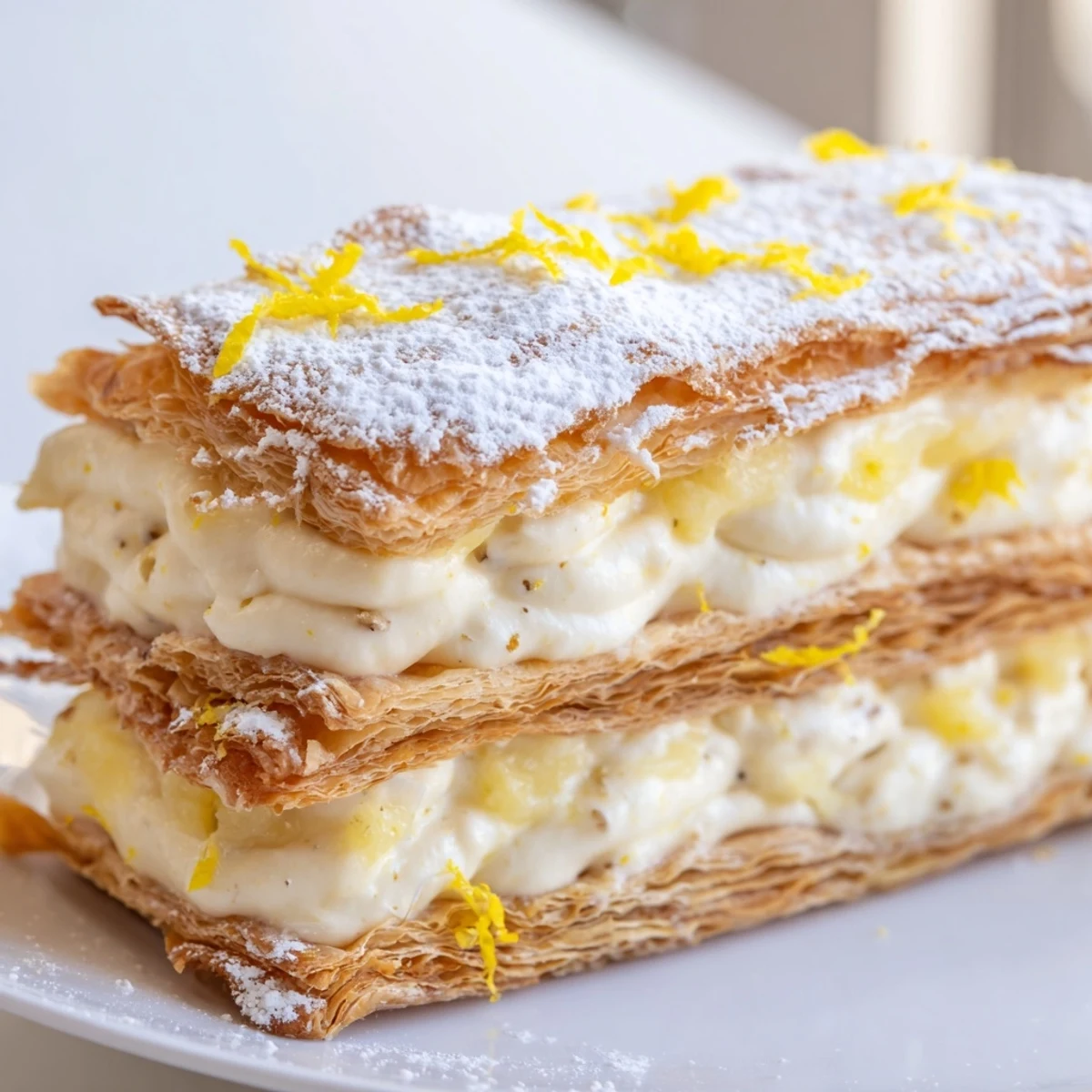
Save This elegant mille feuille pairs buttery, crisp puff pastry with a silky lemon ricotta cream that balances tanginess and sweetness beautifully.
Ready in under an hour, it yields six stunning individual servings perfect for dinner parties or weekend indulgence.
Store-bought puff pastry keeps things approachable while the whipped ricotta filling feels genuinely sophisticated.
The afternoon light was doing that thing where it makes everything in the kitchen look like a painting, and I had a sheet of puff pastry thawing on the counter with no real plan. My neighbor had dropped off a tub of fresh ricotta from the Italian market downtown, and there were three lemons rolling around my fruit bowl like they owned the place. Twenty minutes later I was stacking golden pastry layers with clouds of lemon scented cream, feeling accidentally fancy. Sometimes the best desserts happen when you are just trying to use things up.
I brought these to a potluck dinner where everyone was told to bring something savory, and I showed up with a tray of mille feuille instead. My friend Elena laughed, called me a rebel, then ate two of them standing up in the kitchen before dinner even started. That felt like the highest compliment.
Ingredients
- Puff pastry (1 sheet, about 250 g): Store bought is perfectly fine here, just make sure it is fully thawed but still cold when you work with it.
- Granulated sugar (1 tbsp): A light sprinkle on top of each piece creates a thin, crackly sweetness as it bakes.
- Ricotta cheese (250 g): Drain it in a fine mesh sieve for thirty minutes if it seems wet, because nobody wants a soggy pastry situation.
- Heavy cream (100 ml): This gets folded into the ricotta for lightness, and it should be very cold when you whip it.
- 1 lemon (zest and juice): Use a microplane for the zest and roll the lemon firmly on the counter before juicing to get every last drop.
- Powdered sugar (60 g plus extra for dusting): The measured amount sweetens the cream, and a final shower over the top makes them beautiful.
- Vanilla extract (1 tsp): A quiet background note that rounds out the lemon without competing with it.
Instructions
- Get the oven ready:
- Preheat to 200 degrees C (400 degrees F) and line a baking tray with parchment paper. Give the oven a good fifteen minutes to really hold that heat before anything goes in.
- Cut and weigh down the pastry:
- Roll the dough out gently on a lightly floured surface and cut twelve even rectangles. Lay them on the tray, sprinkle with the sugar, then cover with another sheet of parchment and a second baking tray on top to keep them from puffing into wild shapes.
- Bake until golden:
- Fifteen to twenty minutes should give you deeply golden, crisp layers that sound hollow when tapped. Let them cool completely on a wire rack because even slightly warm pastry will melt your beautiful cream.
- Build the lemon cream:
- Whisk the ricotta until it is completely smooth with no lumps, then stir in the powdered sugar, lemon zest, lemon juice, and vanilla until everything is one bright, fragrant mass.
- Fold in the whipped cream:
- Whip the heavy cream in a separate bowl until it holds stiff peaks, then fold it gently into the ricotta mixture with a spatula. Stop as soon as it is combined so you do not deflate what you just built.
- Stack and serve:
- Spread or pipe a generous layer of cream onto six of the pastry rectangles, then crown each with a second rectangle. Dust the tops with powdered sugar and a little extra lemon zest, and serve right away while the pastry still snaps.
 Save
Save The first time I made these I left them sitting for two hours before serving and the pastry went soft and lovely in a bread pudding sort of way, which was delicious but entirely the wrong dessert. Now I treat the assembly like a final act and call everyone to the table the moment the last puff of sugar lands.
Playing With Variations
Demerara sugar on top of the pastry before baking gives you a deeper, almost caramelized crunch that pairs beautifully with the brightness of the lemon cream. In summer I have piled fresh raspberries and blueberries between the layers, and once I drizzled the whole thing with warm honey because I was feeling reckless. The bones of this recipe are strong enough to hold up to almost any sweet impulse.
What to Serve Alongside
A chilled glass of Moscato d'Asti or limoncello works beautifully here, something with a little sweetness and a citrus edge that echoes what is already on the plate. Coffee works too, especially a strong espresso that cuts through the richness of the cream. I served these after a simple pasta dinner once and the whole evening felt like eating in someone's grandmother's kitchen in Rome.
Tools That Actually Help
A rolling pin and two baking trays are really the only specialty equipment here, though a piping bag makes the cream layers look tidy if you are serving these to guests. I have also just used a spoon and called it rustic, which tastes exactly the same. A microplane for the lemon zest will change your life more than any piping bag ever could.
- Keep a bowl of ice water nearby when whipping the cream on a warm day, because a warm bowl and warm beaters will turn your cream to butter faster than you think.
- Rotate the baking tray halfway through cooking if your oven has hot spots, because unevenly baked pastry is frustrating to stack.
- Remember that this dessert is best eaten with your hands slightly tilted over a plate, because the pastry will shatter and that is part of the joy.
 Save
Save There is something quietly wonderful about a dessert that lets you build it with your hands, stacking crisp layers and soft cream into something that looks far more complicated than it actually is. Share them with someone who appreciates the beauty of simple things done well.
Recipe FAQs
- → Can I make the puff pastry from scratch?
-
Absolutely. Homemade puff pastry will deliver the flakiest results, though it adds roughly two hours of prep and resting time. If using store-bought, opt for an all-butter variety for the best flavor and texture.
- → How far in advance can I prepare the lemon ricotta cream?
-
You can prepare the ricotta cream up to 24 hours ahead. Keep it refrigerated in an airtight container and give it a gentle stir before assembling. The lemon flavor actually deepens as it rests.
- → Why do I need a second baking tray on top of the pastry?
-
Placing a second tray on top weights the pastry down, preventing it from puffing unevenly. This ensures flat, even rectangles that are much easier to stack and assemble into neat layers.
- → Can I assemble these ahead of time for a party?
-
It's best to bake the pastry rectangles and prepare the cream separately, then assemble no more than one hour before serving. Once assembled, the pastry begins softening from the moisture in the cream.
- → What can I substitute for ricotta cheese?
-
Mascarpone works beautifully as a direct swap, yielding an even richer filling. strained Greek yogurt or whipped cream cheese are also viable alternatives, though the texture and tang will shift slightly.
- → How should I store leftovers?
-
Cover assembled leftovers loosely and refrigerate for up to one day. The pastry will lose some crispness but the flavor remains excellent. Unassembled pastry rectangles can be stored in an airtight container at room temperature for up to three days.