
 Save
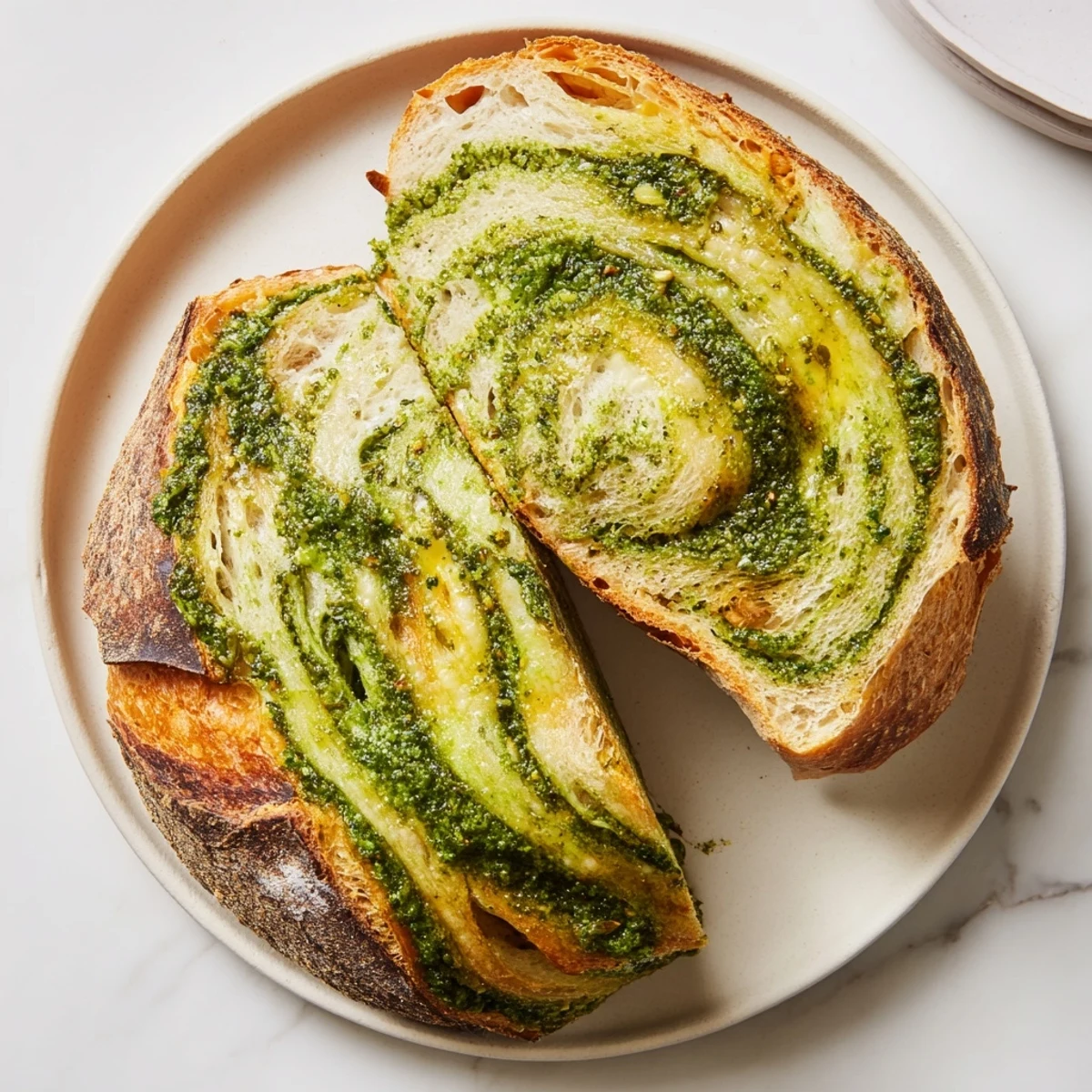
Save This artisan loaf combines the tangy complexity of naturally fermented sourdough with aromatic basil pesto and nutty Parmesan. The dough develops over 5–8 hours, creating those signature airy holes and chewy texture that sourdough lovers crave. During shaping, the pesto gets swirled throughout creating beautiful green streaks, while extra Parmesan on top forms a savory, golden crust.
The result is a stunning presentation that delivers layers of flavor — the slight tang of fermentation balances perfectly with fresh basil and rich cheese. Slice thick for gourmet grilled cheese, use as sandwich bread, or tear and share alongside pasta dishes. The preparation requires patience but rewards with bakery-quality results that elevate any meal.
The first time I pulled this bread from the oven, my entire apartment smelled like an Italian herb garden. I had been experimenting with adding mix-ins to my sourdough for months, but something about the combination of fragrant basil and salty Parmesan felt like discovering a secret handshake. Now it is the bread my friends actually text me about days after dinner.
I made this loaf on a rainy Sunday when I had fresh basil threatening to wilt in my fridge. My roommate wandered into the kitchen three times during the rise, asking if it was done yet. The wait was worth it though we ate almost half the loaf warm from the oven with nothing but butter.
Ingredients
- 500 g bread flour: High protein flour gives you that beautiful open crumb structure and chewy texture we all want in sourdough
- 350 ml lukewarm water: Warm water helps wake up your starter without killing the beneficial bacteria
- 100 g active sourdough starter: Use starter at its peak bubble activity for the best rise and flavor development
- 10 g fine sea salt: Fine salt distributes more evenly than coarse and strengthens gluten structure
- 70 g basil pesto: Room temperature pesto spreads easier without tearing your carefully developed dough
- 50 g freshly grated Parmesan cheese: Freshly grated melts beautifully compared to pre shredded which contains anti caking agents
- 1 tbsp olive oil: Creates that gorgeous golden finish and helps the remaining Parmesan cling to the crust
Instructions
- Start with the autolyse:
- Mix flour and water in a large bowl until just combined and shaggy. Cover and let rest for 30 to 45 minutes. This simple step allows the flour to hydrate fully and makes later kneading so much easier.
- Build the dough:
- Add your active starter and sea salt to the bowl. Mix thoroughly using your hands or a dough scraper until fully incorporated. The dough will start to develop some elasticity and smooth out.
- Stretch and fold:
- Perform stretch and folds every 30 minutes for 2 hours. Grab one edge of the dough and pull it up then fold it over the center. Rotate the bowl and repeat four times per session. Keep the dough covered between folds.
- Rest the dough:
- After the final fold let the dough rest for 1 hour at room temperature. This final rest relaxes the gluten making it easier to shape later.
- Shape for filling:
- Turn the dough onto a lightly floured surface. Gently stretch it into a rectangle. Take your time here and let the dough resist a little rather than forcing it.
- Add the filling:
- Spread the pesto evenly over the dough leaving a 2 cm border. Sprinkle 40 g of Parmesan over the pesto layer. The border helps seal everything inside when you roll.
- Roll and shape:
- Roll the dough up into a log from the short end. Shape into a round or batard depending on your preference. Try to keep the pesto inside as you work.
- Final rise:
- Place into a well floured banneton or bowl seam side up. Cover and let rise at room temperature for 2 to 3 hours. For deeper flavor you can refrigerate overnight.
- Preheat properly:
- Preheat oven to 230°C with a Dutch oven or baking stone inside. This initial blast of high heat creates oven spring. Let it preheat for at least 30 minutes.
- Score and top:
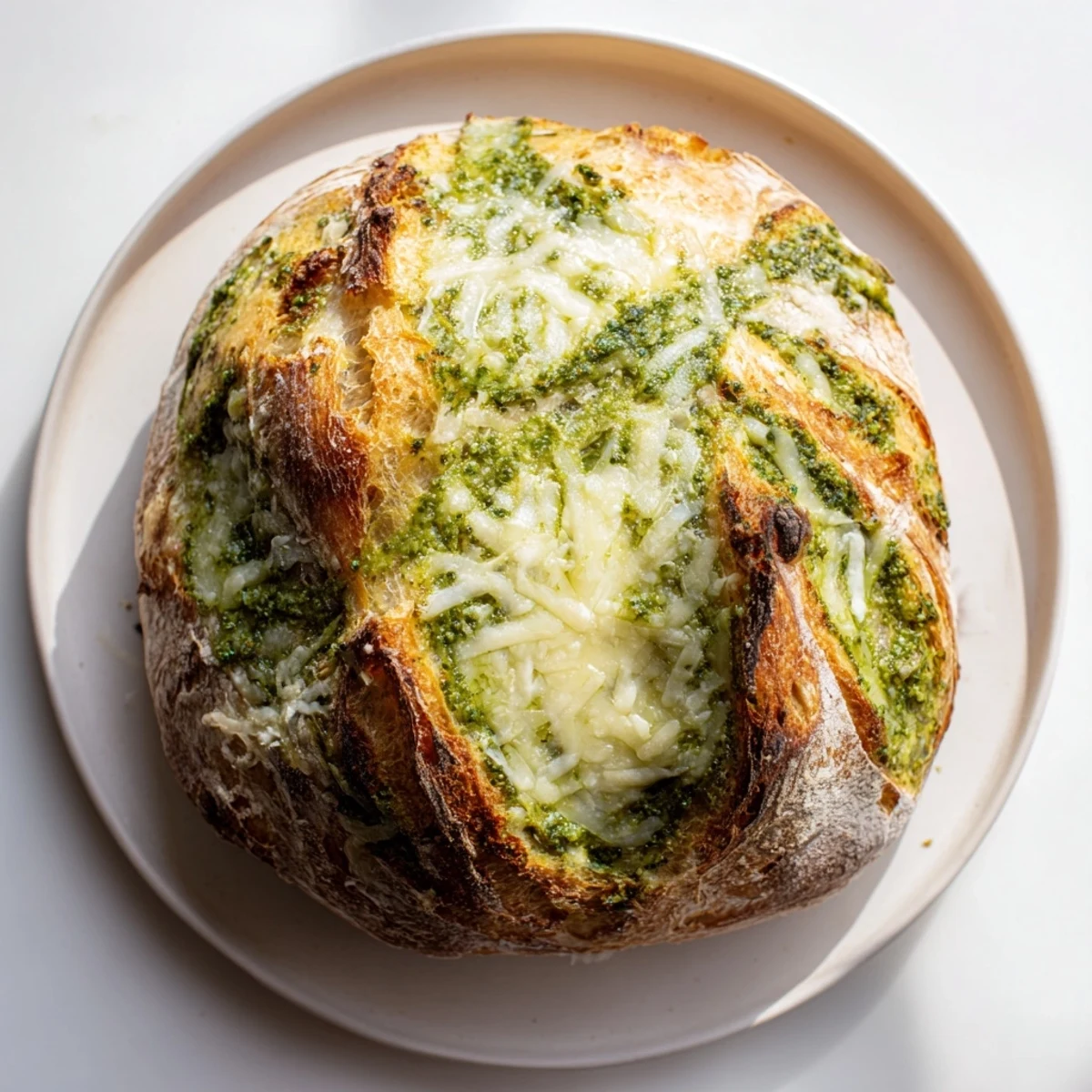
- Turn the dough out onto parchment. Brush the top with olive oil and sprinkle with remaining Parmesan. Score as desired to guide the expansion.
- Bake covered:
- Bake in the preheated Dutch oven covered for 20 minutes. The trapped steam creates that crispy blistered crust. Remove the lid carefully.
- Finish baking:
- Bake for another 18 to 20 minutes until golden brown and crusty. The internal temperature should reach about 98°C. Let cool completely on a wire rack.
 Save
Save This bread has become my go to for housewarming gifts because people remember it months later. Last autumn I brought a loaf to a potluck and someone accidentally left with the empty bread basket thinking it was part of their stuff.
Pesto Variations That Work
Sun dried tomato pesto creates this stunning red orange swirl and adds a sweet chewy contrast to the sourdough. Walnut pesto gives you this earthy richness that pairs beautifully with the Parmesan. Arugula pesto brings a peppery bite that cuts through the richness.
Serving Ideas
This bread makes the most incredible grilled cheese you will ever eat. I love slicing it thick and toasting it then rubbing with raw garlic. It also shines alongside a simple soup or as part of a cheese board.
Storage And Freezing
Store the loaf cut side down on a cutting board for up to two days. The crust will soften over time which can actually be nice for some people. For longer storage slice the bread and freeze individual pieces in a freezer bag.
- Toast frozen slices directly from the freezer about 3 to 4 minutes per side
- Revive day old bread by sprinkling with water and reheating at 180°C for 10 minutes
- The pesto flavor actually develops more after the bread has sat for a day
 Save
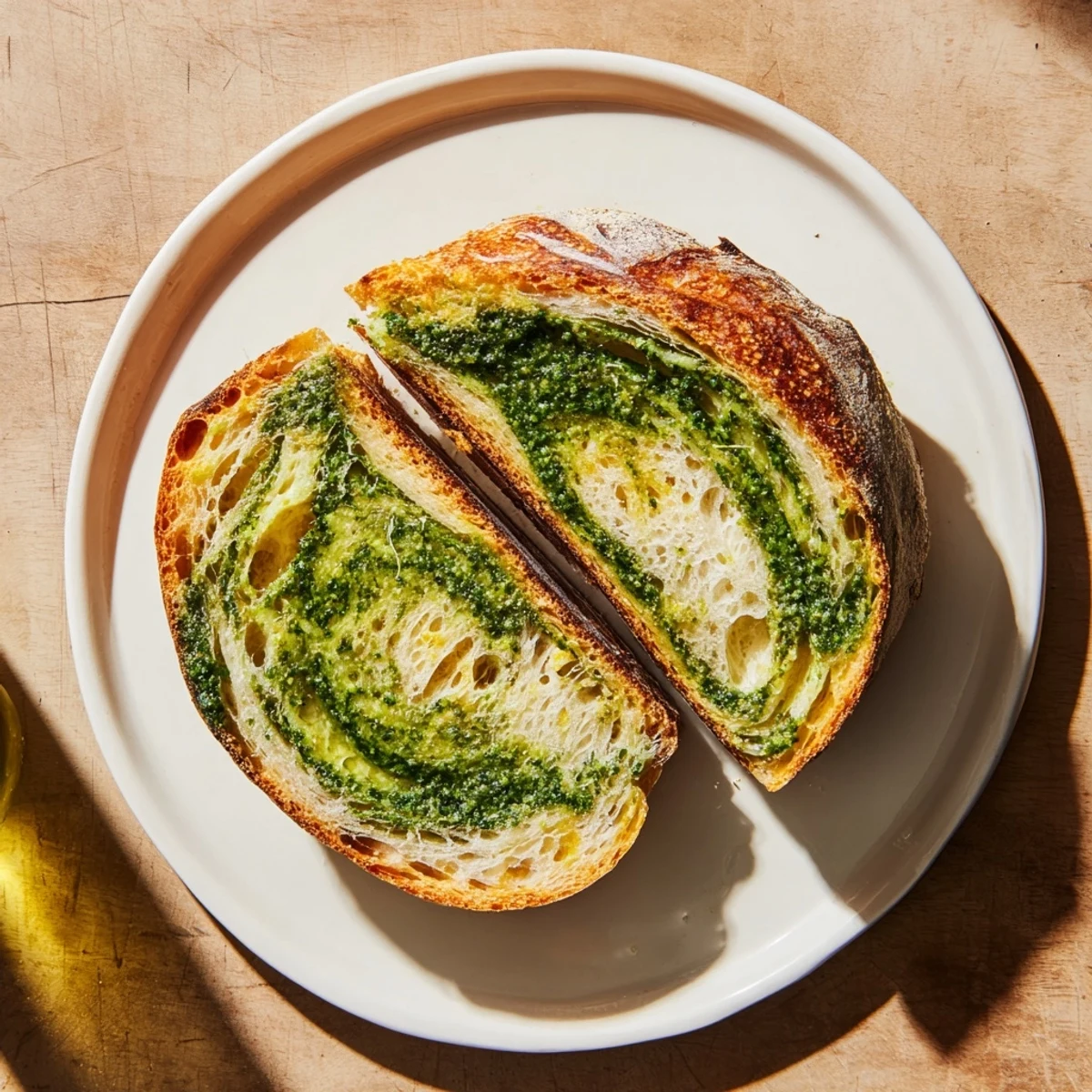
Save There is something deeply satisfying about cutting into this bread and seeing those green ribbons running through the crumb. Hope it brings as much joy to your kitchen as it has to mine.
Recipe FAQs
- → Can I use store-bought pesto?
-
Yes, store-bought pesto works perfectly. Look for brands with fresh basil and good quality olive oil. Homemade pesto allows you to control the garlic intensity and cheese ratio, but both versions create delicious results in the finished loaf.
- → What if I don't have a Dutch oven?
-
A baking stone or heavy baking sheet preheated in a hot oven creates similar steam retention. Alternatively, place a metal baking pan on the bottom rack and add ice cubes when you put the loaf in — the steam helps develop a crispy, golden crust.
- → Can I make this with commercial yeast instead of starter?
-
You can substitute 7g instant yeast for the starter. Reduce water slightly since yeast doughs typically need less hydration. The flavor will be less complex and the texture more uniform, but you'll still get a delicious pesto-swirled bread with a shorter rise time.
- → How should I store the finished loaf?
-
Store at room temperature in a paper bag or wrapped in a cloth for up to 2 days. The crust will soften over time — recrisp in a 375°F oven for 5–10 minutes. For longer storage, slice and freeze in a freezer bag, toasting individual slices as needed.
- → Can I refrigerate the dough overnight?
-
Absolutely. After shaping and placing in the banneton, cover and refrigerate for 8–12 hours. The cold fermentation develops deeper flavor and makes scheduling easier. Let it warm at room temperature for 30–60 minutes while the oven preheats before baking.
- → What other cheeses work well in this loaf?
-
Aged Asiago or Pecorino Romano add sharper notes. For a milder option, try Gruyère or Fontina. Mixing Parmesan with mozzarella creates extra melt. The key is using cheeses that can withstand high baking temperatures without burning too quickly.